
Plan your panel upgrade with us
Tell us what is prompting the work, and the written estimate will set out the scope.
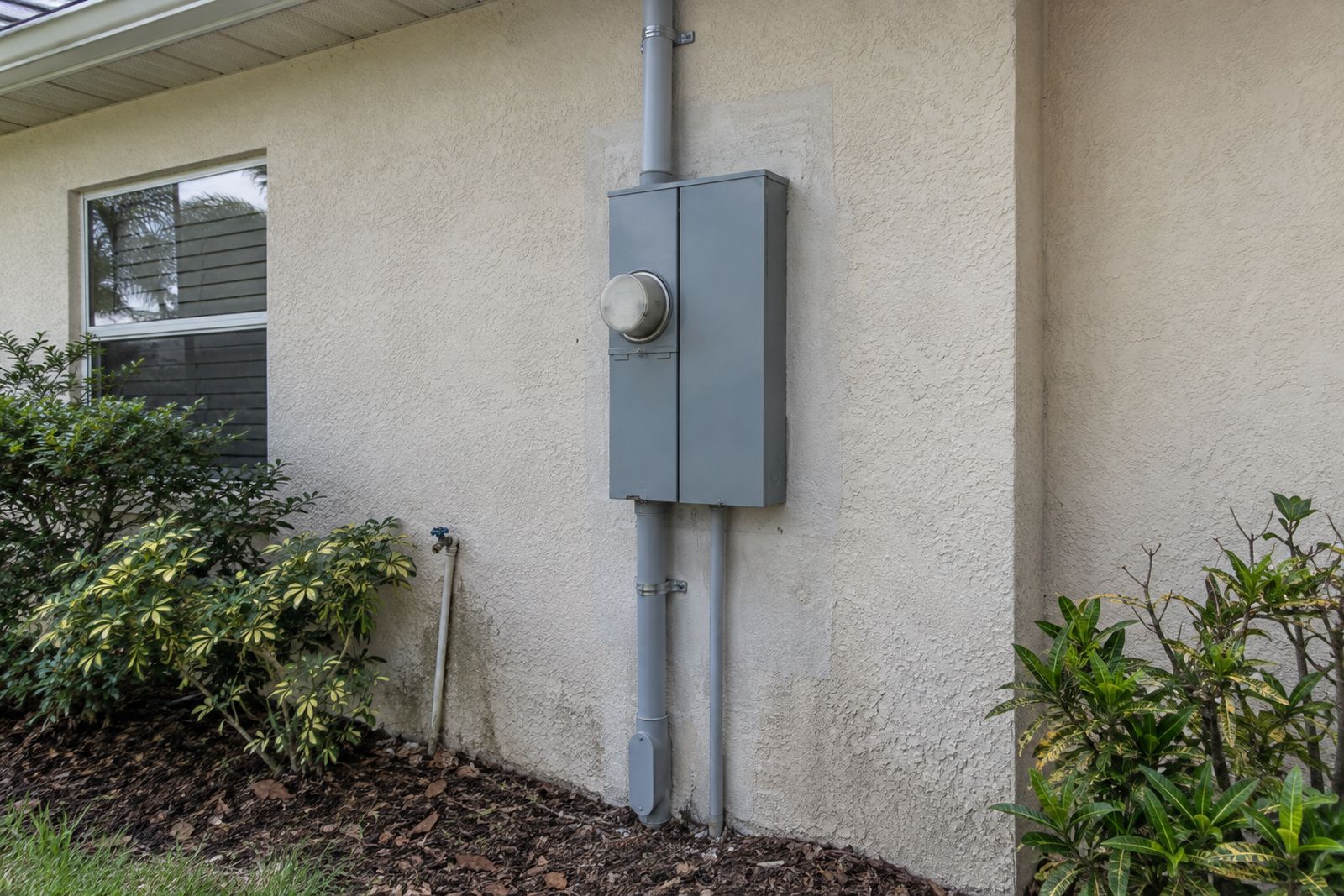
Often, no. A standby generator connects to the house through an automatic transfer switch, and many panels in good condition work with one as they are. A panel upgrade or replacement comes first when the panel is failing, full, one of the brands insurers flag, or on a service too small for what the house now runs. Here is how to tell which side of that line your home is on before a Generac or Kohler standby installation.
A home standby generator is wired to an automatic transfer switch, which sits between the utility supply and your breakers. When the grid fails, the switch disconnects the house from the utility and connects it to the generator; when utility power returns, it switches back. That separation is also what keeps generator power off the utility's lines.
There are two general ways to set it up:
Which one suits you depends on the house, the loads you want running and the generator you choose. Either way, the panel and the service are part of the design.
Plenty of homes keep their panel. It is usually fine when:
In that case the electrical work is the connection for the transfer switch, which is part of a standby generator installation.
A generator can only back up the electrical system you have. If that system has a problem, the generator inherits it. The usual reasons to deal with the panel before, or alongside, a generator:
A generator has a fixed output. Large loads that start together, especially central air conditioners, a pool heater or an electric range, can ask for more than it can give at once. Load management is the general name for controls that hold some of those loads back and let them run when there is capacity to spare, so a given generator can cover more of the house.
Whether it applies to your home, and how, depends on the generator, the transfer switch and the loads. It is not a fix for a service that is too small, and it is worth asking about at the assessment rather than assuming.
For a standby generator, our free on-site assessment looks at the panel, the loads you want backed up and the gas supply, then we recommend a system and quote it in writing. Because the panel is part of that visit, a panel problem is something to talk through then, not something to discover later.
To make the most of it, have these ready:
Start with a free generator assessment. Already know the panel needs replacing or upgrading? Ask about an estimate for the panel work on its own.
A standby generator and its transfer switch contain electronics, and so does most of what they keep running. A whole-house surge protector at the panel helps reduce damage from surges caused by lightning, utility switching and large appliances cycling, and it is best added during a generator installation, when the electrical work is already under way. No surge protector can fully protect against a direct lightning strike.
If the job replaces the service equipment, there may be a code reason as well. Since Florida adopted the 2020 National Electrical Code, section 230.67 has called for a Type 1 or Type 2 surge protective device, built into a home's service equipment or mounted right beside it, whenever that equipment is installed or replaced. Ask us or your building department how it applies to your property, and read more about whole-house surge protection.
A standby generator installation is permitted work, and so is a panel changeout or service upgrade. Panel work is permitted under our State Certified Electrical Contractor license, EC13002031, and inspected by the local building department. Gas work for the generator is done under our gas contractor license, #24513, and we handle the gas permit and its inspection. Any work at the meter also needs the electric utility's involvement.
How long permitting takes varies by jurisdiction and by job, so treat any schedule as something to confirm rather than assume.
Read more about panel upgrades and changeouts or how installation works, or call (561) 242-8869. We serve Palm Beach, Martin and St. Lucie counties; check your town.
Tell us what is prompting the work, and the written estimate will set out the scope.