
Electrical panel upgrades
Panel upgrades and changeouts from 100 to 400 amp, meter cans and three-phase, permitted and inspected.
ExploreHome / Whole-house surge protection
Whole-house surge protection · Palm Beach, Martin & St. LucieA whole-house surge protector mounts at your electrical panel and limits the spikes that lightning, utility switching and cycling air-conditioning compressors send through the wiring. We install Type 1 and Type 2 devices for homes and businesses across Palm Beach, Martin and St. Lucie counties.
Office Mon–Fri 8am–4:30pm · you reach our West Palm Beach team
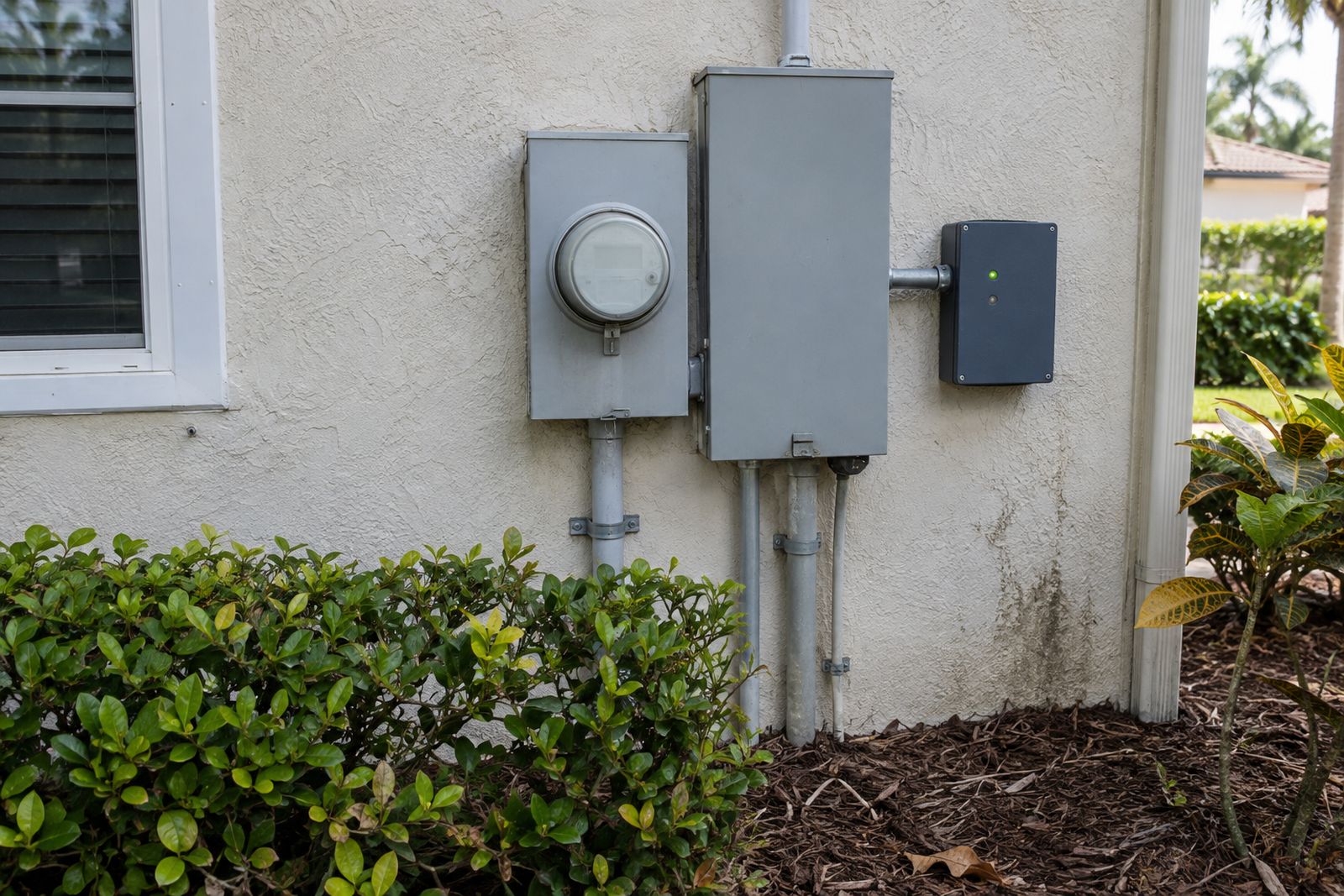
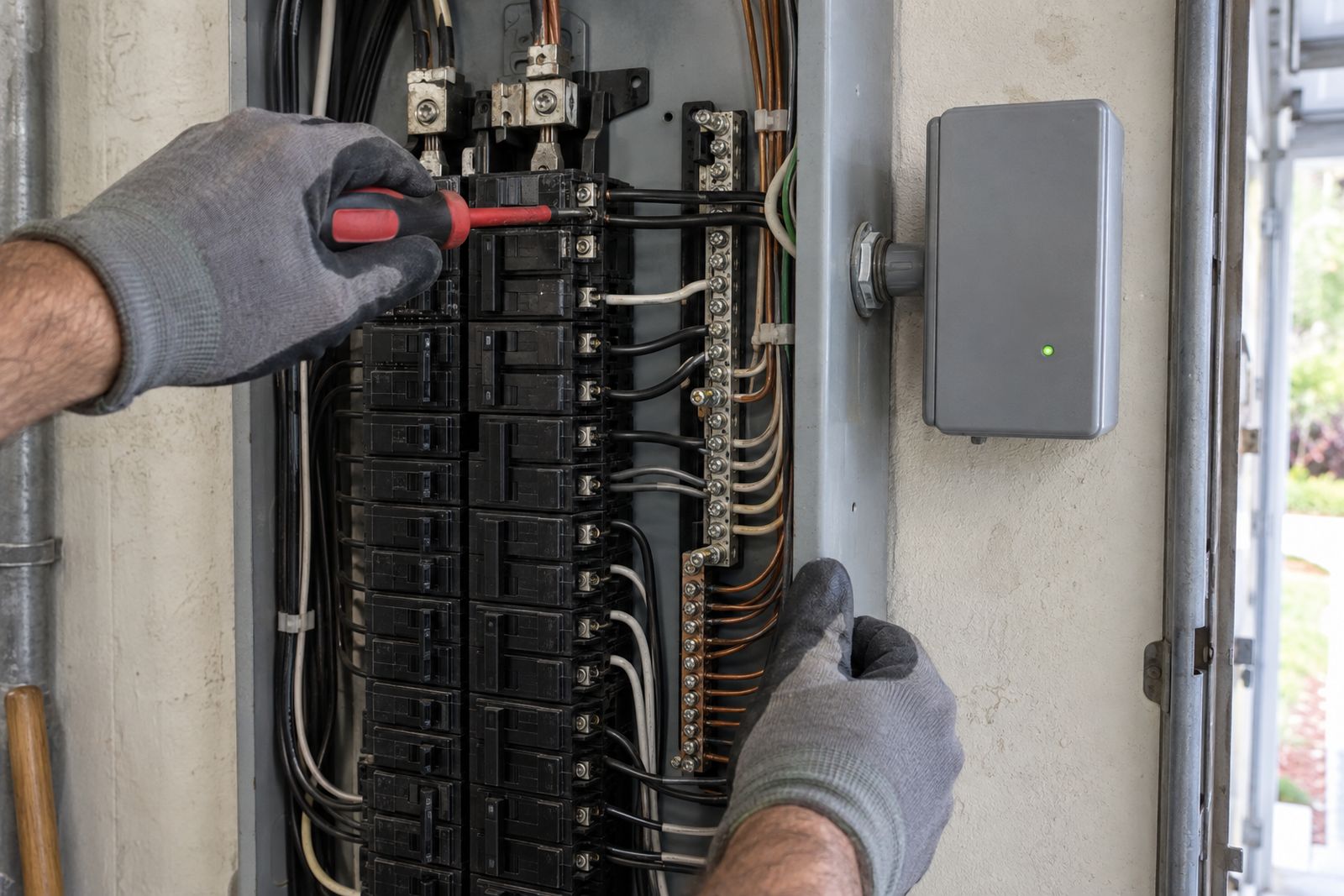
A whole-house surge protector, also sold as a whole-house surge suppressor or surge protective device (SPD), is a small box wired into your electrical service. When a voltage spike arrives, it diverts most of the surge current to ground, so far less of it reaches the circuits in the house.
It mounts at the service, not at an outlet. A Type 1 device can connect on the line side of the main breaker, including at the meter, or on the load side. A Type 2 device connects on the load side only, beside the main panel, usually on its own breaker. Our guide to Type 1 vs Type 2 surge protectors explains which suits which layout.
Summer afternoon thunderstorms make South Florida one of the most lightning-active parts of the country, and a strike does not have to hit your roof. One nearby, or on the utility lines, can push a spike into the service. Lightning is only part of the picture.
A whole-house unit helps protect what runs on your service: the generator and transfer switch, the air-conditioning system, kitchen appliances, TVs and home-theater equipment, computers, routers and smart-home devices, and security and alarm systems.
A whole-house surge protector reduces the risk of damage from surges. It cannot guarantee protection from a direct lightning strike on your house, which can bring more energy, by more routes, than a device at the panel is built to handle.
It is also not a lightning protection system. Rods and air terminals on the roof are a separate specialty, and we do not install them.
Plug-in surge protectors still have a job. The panel device takes the big spikes and lets a smaller remainder through, and surges can also arrive on cable, satellite and phone lines, which it does not cover. Keep good point-of-use protection on the TV, the computer and the network equipment.
Each device carries a lifetime warranty plus a connected-equipment warranty whose amount depends on the model, and the terms are written into your estimate.
60 kA per phase. The entry-level option of the three, and it meets the minimum NEC requirement for a whole-home device. A practical choice for a typical house.
100 kA per phase, for homes with more to lose: a standby generator, more than one AC system and plenty of electronics. More surge capacity generally means more headroom over years of storms.
120 kA per phase, the highest of the three, in a cast aluminum NEMA 4X enclosure made for outdoor, corrosive conditions, with a built-in RF/EMI filter for high-frequency electrical noise.
With a standby generator. The best time to add a whole-house surge protector is during a standby generator installation, when the panel and transfer switch are already being worked on, or at a generator service visit. It can also be installed on its own.
With a panel changeout. The 2020 National Electrical Code requires a Type 1 or Type 2 surge protective device on services supplying homes (NEC 230.67), including when service equipment is replaced, and Florida's building code has adopted the rule. That makes an electrical panel upgrade or changeout the natural time to add one. Ask us or your building department how the rule applies to your property.
For commercial properties. We install Type 1 and Type 2 devices on commercial services too, matched to the building's service voltage and configuration. We work across Palm Beach County and the Treasure Coast from our West Palm Beach office.
Every job is quoted individually in a written estimate. What moves the number:
On your side, the only thing to arrange is access to the panel and the meter. Ask about an estimate.
Call or send us a message with the address, whether it is a home or a business, and whether a standby generator or panel work is already planned.
The estimate names the model, Type 1 or Type 2, where it mounts and that model's warranty terms. PSP states that warranty registration is no longer required.
The device is connected at your service equipment. Where the building department requires a permit, it is pulled under our electrical license, EC13002031.
Once the device is powered, its status lights are checked to confirm it is protecting. After a big storm, the same lights show you whether it still is.
A generator runs without one, but it makes one more worthwhile. Its controller and the automatic transfer switch are electronics on your electrical service, and the house switches power sources at every outage. A whole-house surge protector helps protect them, and it is easiest to add during the installation or a service visit.
No. It takes the large spikes at the panel, but a smaller remainder still reaches the outlets, and it does not cover cable, satellite or phone lines. Keep good point-of-use surge protectors, not plain power strips, on TVs, computers and network equipment. The two work as layers.
No device can promise that. A whole-house surge protector helps reduce damage from surges, including those from nearby lightning and strikes on utility lines, but a direct strike on the house can carry more energy than it can handle. It is not a lightning rod system either, and we do not install those.
For a new service, or when service equipment is replaced, generally yes. Section 230.67 of the 2020 National Electrical Code, adopted with the Florida Building Code's 8th edition (2023), calls for a Type 1 or Type 2 surge protective device on every service that supplies a home. A service that is not being changed generally does not have to add one. Ask us or your building department how it applies.
Either can satisfy the code for homes when it is part of, or right beside, the service equipment. A Type 1 can connect ahead of the main breaker, including at the meter, or after it; a Type 2 connects only after it, at the panel. The right one depends on how your service is laid out, and your estimate names the type we recommend.
Usually, if the panel has room for the connection and is in sound condition. If it is an older Federal Pacific Stab-Lok or Zinsco panel, or one showing damage, the better plan may be a panel changeout first, with the surge protector added as part of that job.
Whole-house surge protection across Palm Beach, Martin and St. Lucie counties, from 2771 Vista Parkway — the same footprint as our generator work. We do not cover Broward County.
Check the full service area →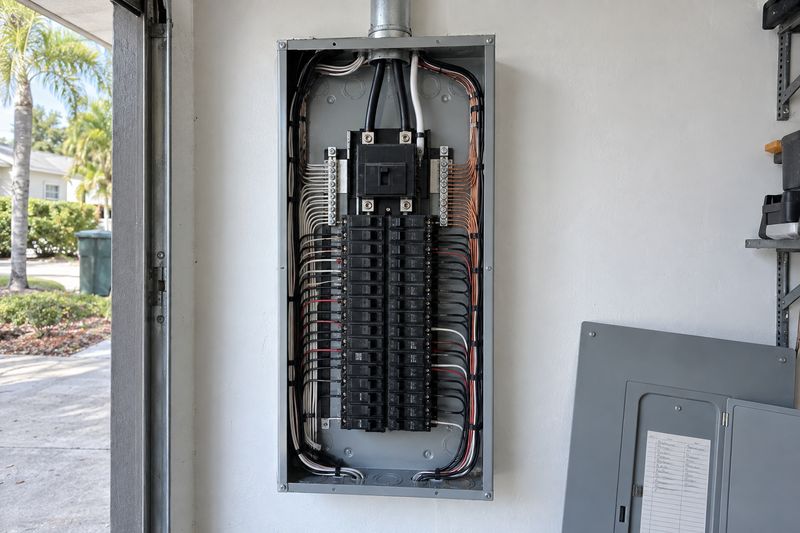
Panel upgrades and changeouts from 100 to 400 amp, meter cans and three-phase, permitted and inspected.
Explore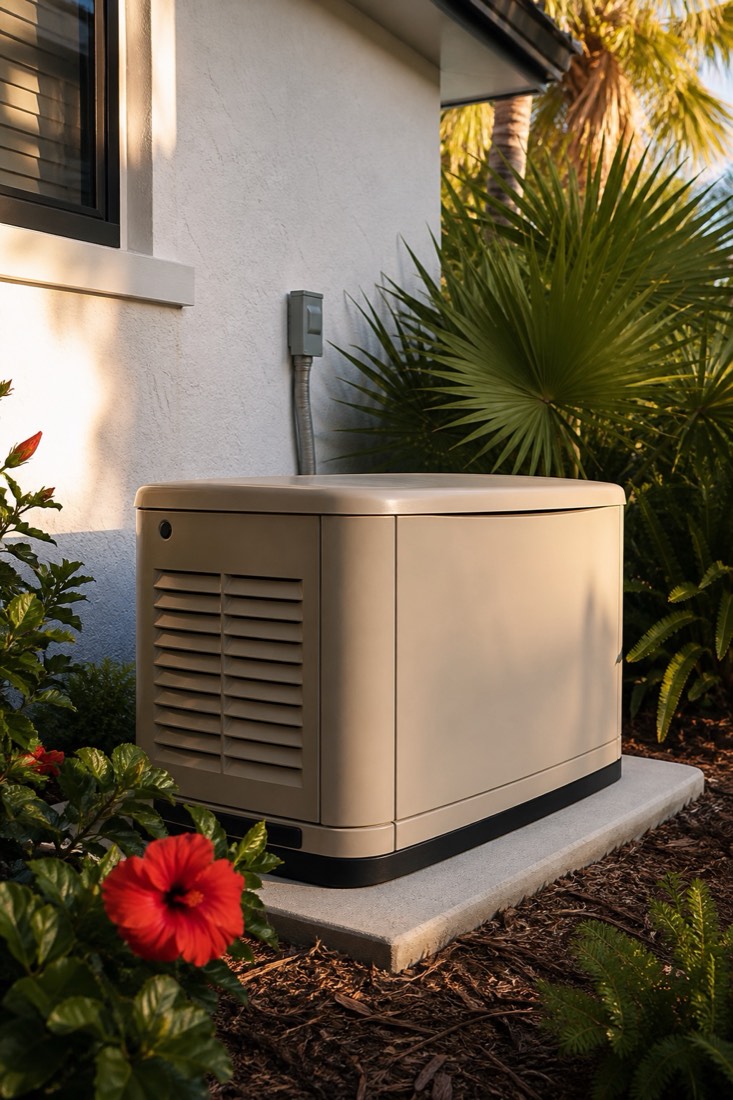
Sized, permitted and installed by one licensed team.
Explore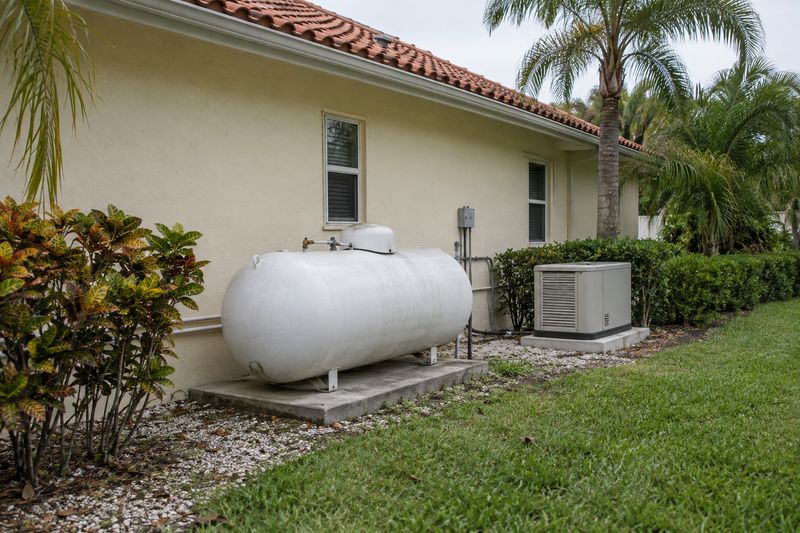
Propane tanks and gas lines under gas contractor license #24513, with the permit handled in-house.
Explore
Tell us about the property and any generator or panel work planned, and we will put the options in writing.