
Gas & propane services
Propane tanks and gas lines under gas contractor license #24513, with the permit handled in-house.
ExploreHome / Gas & propane services / Propane tank installation
Propane tank installation · Palm Beach, Martin & St. LucieWe handle propane tank installation for homes and standby generators across Palm Beach County and the Treasure Coast: underground and above-ground tanks, the line to the generator or house and the regulators, all under gas contractor license #24513. The price covers the tank and its installation; the propane fill is separate.
Office Mon–Fri 8am–4:30pm · you reach our West Palm Beach team
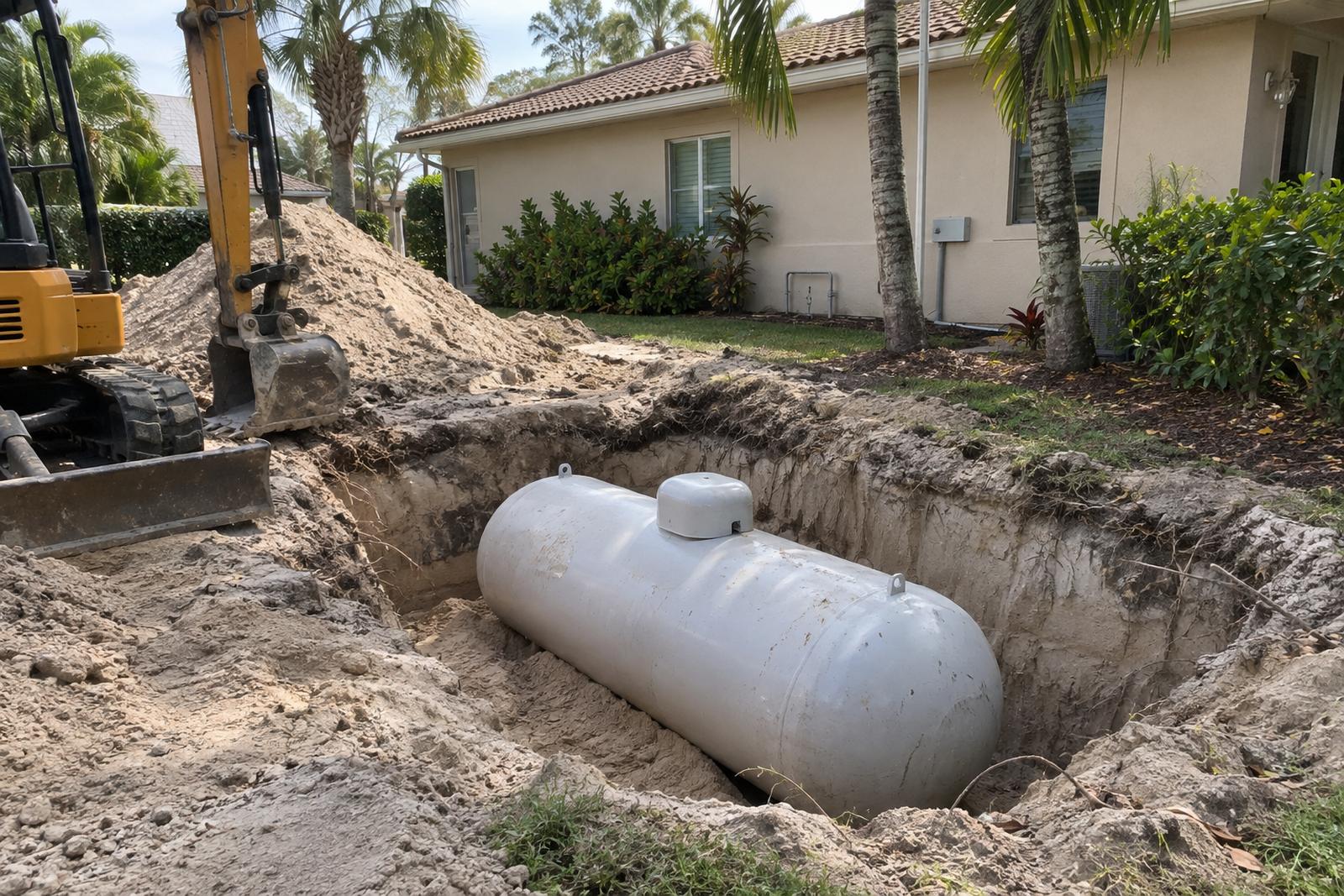
The job we quote covers supplying the tank, setting it in the ground or on a level base, running the line from the tank to the generator or the house, fitting the regulators and making the connection points. The gas permit is pulled under our license and the installation is inspected.
Every job is priced individually, because tank size, site conditions and line length differ between properties. The propane is not part of the price: a propane supplier fills the tank once it is in, and our office can coordinate that first fill for you. If the line is the bigger part of your project, see gas line installation; for the full scope, see gas and propane services.
| Underground tank | Above-ground tank | |
|---|---|---|
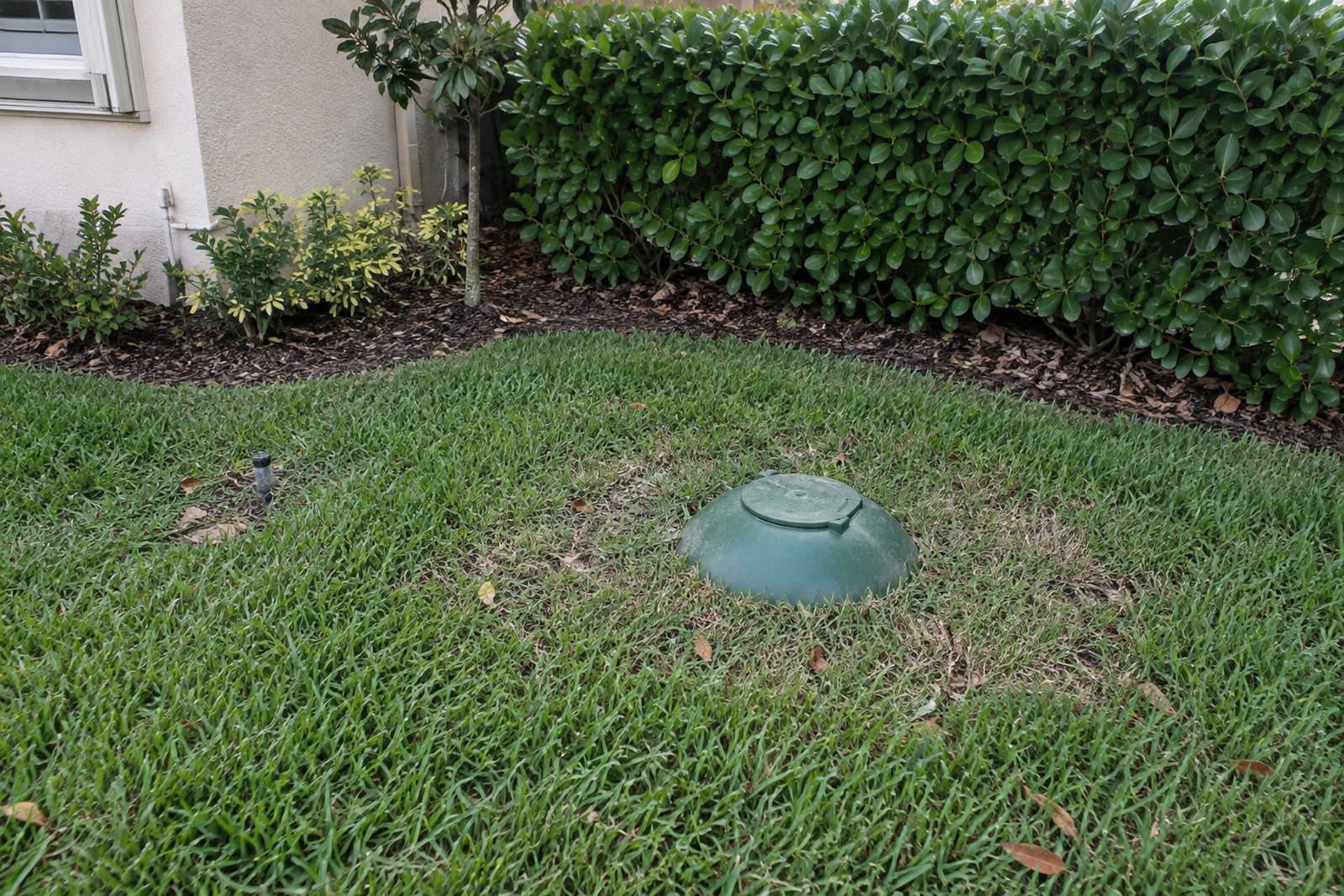
| What you see | A low access dome at lawn level | The whole tank, unless it is screened |
| HOA and neighbors | Often preferred where visible equipment is restricted | Check whether screening or approval is required |
| Placement | Needs room to dig and for a machine to reach | Needs a level, stable spot; easier on tight access |
| Site work | Excavation and backfill; the lawn has to regrow | A level base; the line may still be trenched |
| Typical use | Whole-home and generator supply where looks matter | Generators and appliances where a visible tank is fine |
| What moves the cost | Tank size, digging conditions, access, line length | Tank size, base, line length, any screening |
Clearances from buildings, openings, property lines and ignition sources apply to both types and are set by NFPA 58 and the local authority, so we confirm them for your lot, not over the phone.
Common residential propane tank sizes include 120, 250, 500 and 1,000 gallons. A tank is filled to about 80% of its capacity to leave room for the propane to expand, so a full 500-gallon tank holds roughly 400 gallons and a 1,000-gallon tank roughly 800.
For a standby generator, start with how long you want it to run between fills. The tank that delivers that depends on the generator's size, how much of the house it carries and whether the same tank also feeds a water heater, range or pool heater. Our guide to underground vs above-ground propane tanks shows how to work out runtime from your generator's spec sheet, and standby generator installation covers choosing the generator itself.
Every tank position is subject to the permit review of the municipality or county the property sits in. NFPA 58, the Liquefied Petroleum Gas Code, and your local authority set how far a tank must be from buildings, windows and doors, property lines and anything that could ignite gas. Those distances can change with tank type and size, so we check placement against the code for your lot instead of quoting a figure.
In a community with a homeowners' association, check its rules on tanks, screening and digging before you commit, and allow for the association's own approval, which is separate from the permit. We pull the gas permit and arrange the inspection under license #24513. Check the towns we serve across Palm Beach, Martin and St. Lucie counties.
In Florida a tank has to be planned for wind and water. A buried tank in wet ground or a flood-prone area can be pushed upward by groundwater, and an above-ground tank is exposed to storm winds, so anchoring is a design consideration. What your site requires is set by code and the local authority; ask us how it applies to your property.
Refills are arranged with your propane supplier, not with us. Before hurricane season starts on June 1, check the gauge and have the tank topped up: a generator carrying a house through a long outage can use a lot of fuel, and suppliers may be stretched once a storm is forecast.
Ask about an estimate when you are ready to plan the tank.
A tank is usually part of a generator project when the house has no natural gas. Standby generator installation covers sizing and the transfer switch.
The same tank can feed a range, dryer, water heater or pool heater through additional lines, sized for the combined load. See gas line installation.
A generator installation is a sensible time to add a whole-house surge protector to help protect the generator, transfer switch and appliances. See whole-house surge protection.
It depends on the generator, the loads it carries and how long you want it to run between fills. Common residential sizes include 120, 250, 500 and 1,000 gallons, and a tank is filled to about 80%, so a 500-gallon tank holds about 400 gallons. We size it for the runtime you want.
Neither wins everywhere. An underground tank keeps the yard clear and is often preferred in HOA communities, but it involves more site work. An above-ground tank needs less digging but stays visible. Both must meet the code clearances settled at permit review, and both feed a generator the same way.
No. The price covers supplying and installing the tank, the line, the regulators and the connections. The propane fill is separate and comes from a propane supplier. Our office can coordinate the first fill with a supplier; after that you order refills from the supplier directly, not from us.
Tank placement is subject to the municipality's permit review, so plan on one. We pull the gas permit under license #24513 and arrange the inspection. The position has to satisfy NFPA 58 and the local authority, which is why we confirm it for your lot rather than promise a spot in advance.
That is for your association to decide. A buried tank shows only a low dome at lawn level, which may make approval simpler, but rules differ from one community to the next. Ask the association for its requirements in writing before you commit; its approval is a separate step from the municipal permit.
Propane tank installation across Palm Beach, Martin and St. Lucie counties, from 2771 Vista Parkway — the same footprint as our generator work. We do not cover Broward County.
Check the full service area →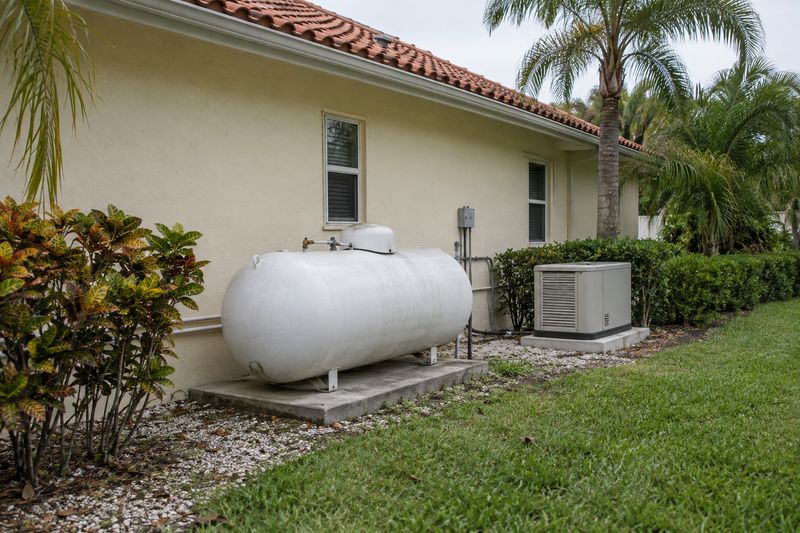
Propane tanks and gas lines under gas contractor license #24513, with the permit handled in-house.
Explore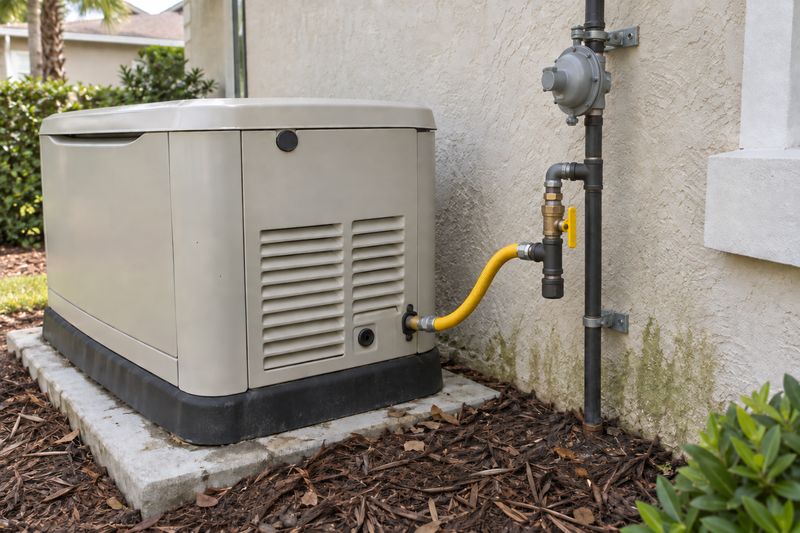
Propane and natural gas lines to a standby generator or a new appliance location, sized and permitted.
Explore
Type 1 and Type 2 surge protectors at the panel, for the generator, the AC and the electronics.
Explore
Send the address and what the tank will feed, and we will work through placement, sizing and the permit with you.